
Pilot Hole Size Chart
How Do You Know What Size Drill Bits You Need?
This is an important question if you are a beginner getting started with construction power tools. One of the first challenges you may experience may involve matching a screw with the right drill bit size. Different measures with varying fractions and decimals are used, so things can get confusing.
Here are a few guidelines to help you get them matched up in no time:
- - The drill bit should be about the same size as the screw shaft without accounting for the threads. To help you get the right bit size, place the screw side by side with the drill bit. Examine their widths, ensuring that they are similar, without accounting for the screw’s thread; if they are the same size, you can go ahead and use them.
- - If you will be using washers and other building materials that require looser screws, then account for the screws’ threads when determining the right drill bit size. This will allow you to create a hole in which the screw will not be too hard against the surface and you will be able to use a washer.
How To Convert And Find Equivalent Bit Sizes
Several standard drill bit sizes exist to help carpenters generate holes of a wide range of sizes depending on their projects. Tables with the most common drill bit sizes and screws should help you hasten the process of conversion so you match your screw to the right drill bit size:
Type AB Self-Tapping Screws, Type B Self-Tapping Screws, Type 25 Thread Cutting Screws. (All require the same pilot hole and drill bit sizes.)
| Screw Size | Screw Threads per Inch | Recommended Hole Diameter | Drill Bit Size |
| #2 | 32 | 0.0760" | #48 |
| #3 | 28 | 0.0810" | #46 |
| #4 | 24 | 0.0860" | #44 |
| #5 | 20 | 0.1065" | #36 |
| #6 | 20 | 0.1160" | #32 |
| #7 | 19 | 0.1285" | #30 |
| #8 | 18 | 0.1360" | #29 |
| #10 | 16 | 0.1590" | #21 |
| #12 | 24 | 0.1875" | 3/16" |
| 1/4" | 14 | 0.2188" | 7/32" |
| 5/16" | 12 | 0.2720" | I |
| 3/8" | 12 | 0.3281" | 21/64" |
Type A Self-Tapping Screws
| Screw Size | Screw Threads per Inch | Recommended Hole Diameter | Drill Bit Size |
| #2 | 32 | 0.0760" | #48 |
| #3 | 28 | 0.0810" | #46 |
| #4 | 24 | 0.0860" | #44 |
| #5 | 20 | 0.1065" | #36 |
| #6 | 18 | 0.1160" | #32 |
| #7 | 16 | 0.1285" | #30 |
| #8 | 15 | 0.1360" | #29 |
| #10 | 12 | 0.1590" | #21 |
| #12 | 11 | 0.1875" | 3/16" |
| #14 / 1/4" | 10 | 0.2188" | 7/32" |
| 5/16" | 9 | 0.2900" | L |
| 3/8" | 9 | 0.3438" | 11/32" |
Type F, Type 1, Type 23 Thread Cutting Screws
| Screw Size-TPI | Recommended Hole Diameter | Drill Bit Size |
| 2-56 | 0.0730" | #49 |
| 3-48 | 0.0810 | #46 |
| 4-40 | 0.0960" | #41 |
| 5-40 | 0.1010" | #37 |
| 6-32 | 0.1200" | #31 |
| 8-32 | 0.1470" | #26 |
| 10-24 | 0.1730" | #17 |
| 10-32 | 0.1770" | #16 |
| 12-24 | 0.1990" | #8 |
| 1/4-20 | 0.2280" | #1 |
| 5/16-18 | 0.2900" | L |
| 3/8-16 | 0.3580" | T |
| 1/2-13 | 0.4531" | 29/64" |
High Low Thread Forming Screws
| Screw Size | Threads Per Inch | Recommended Hole Diameter for Material with Flexural Modulus of Up to 200,000 P.S.I. | Drill Bit Size | Recommended Hole Diameter for Material with Flexural Modulus of Over to 200,000 P.S.I. | Drill Bit Size |
| #2 | 32 | 0.067" | #51 | 0.070" | #50 |
| #3 | 28 | 0.073" | #49 | 0.078" | 5/64" |
| #4 | 24 | 0.081" | #46 | 0.086" | #44 |
| #5 | 20 | 0.094" | #42 | 0.100" | #39 |
| #6 | 19 | 0.102" | #38 | 0.110" | #35 |
| #7 | 19 | 0.120" | #31 | 0.125" | 1/8" |
| #8 | 18 | 0.120" | #31 | 0.129" | #30 |
| #10 | 16 | 0.136" | #29 | 0.144" | #27 |
| #12 | 16 | 0.157" | #22 | 0.166" | #19 |
| #14 / 1/4" | 15 | 0.189" | #12 | 0.201" | #7 |
| 5/16" | 14 | 0.238" | #B | 0.250" | 1/4" (E) |
U-Drive or Hammer Drive Screws
| Screw Size-TPI | Recommended Hole Diameter | Drill Bit Size |
| 00 | 0.052" | #55 |
| 0 | 0.067" | #51 |
| 2 | 0.086" | #44 |
| 4 | 0.104" | #37 |
| 6 | 0.120" | #31 |
| 7 | 0.136" | #29 |
| 8 | 0.144" | #27 |
| 10 | 0.161" | #20 |
| 12 | 0.191" | #11 |
| 14 | 0.221" | #2 |
Thread Forming Screws for Plastics
| Screw Size | Screw Threads Per Inch | Soft Ductile Materials | Brittle Materials |
| #0 | 40 | 0.0498" | 0.0490" |
| #2 | 28 | 0.0760" | 0.0800" |
| #3 | 24 | 0.0880" | 0.0940" |
| #4 | 20 | 0.1000" | 0.1060" |
| #5 | 20 | 0.1110" | 0.1170" |
| #6 | 19 | 0.1220" | 0.1280" |
| #7 | 18 | 0.1340" | 0.1420" |
| #8 | 16 | 0.1490" | 0.1580" |
| #9 | 15 | 0.1620" | 0.1720" |
| #10 | 14 | 0.1750" | 0.1850" |
| #12 | 11 | 0.1950" | 0.2050" |
| #14 or 1/4" | 10 | 0.2240" | 0.2400" |
| 5/16" | 9 | 0.2860" | 0.3030" |
How to Make a Perfect Pilot Hole
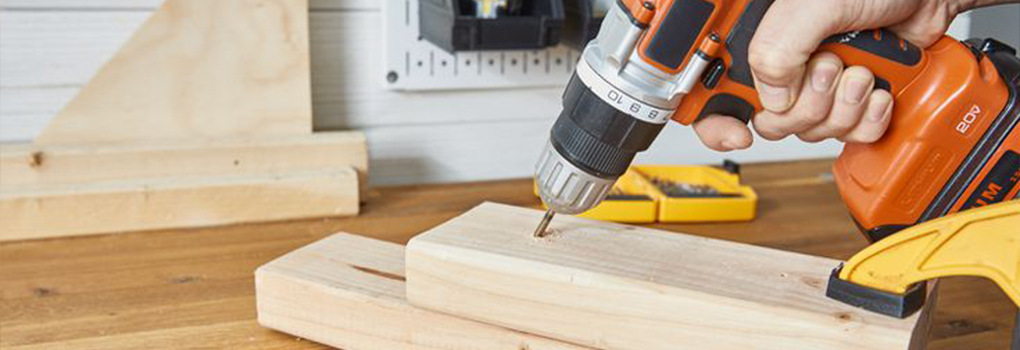
Once you have identified the right drill bit for your screws, the next step is to drill the pilot hole. Drilling pilot holes right will help you guide the screw into its path. Without one, you will face wood chipping and splintering, and you might break your drill bit. Here are some steps to follow in drilling a pilot hole:
- Mark your target point with a pencil so you know where to start your hole
- Secure the surface in preparation for drilling. For wood, you can use clamps. Do not use too much pressure or the wood will chip or metallic surface bend. If you are making a pilot hole into a wall, skip this step.
- Attach the drill bit you identified earlier and place it vertically to the dot you marked
- If you are drilling through the surface, stop as soon as the drill emerges completely on the other side. If drilling partially, mark your bit to help you know when to stop.
- As the drill bit is still spinning, slowly pull out the bit. This will remove wood debris in the hole, prevent divots, and polish the surface.
- Wipe away the surface debris with a rag then use the screw you picked.
Drilling Holes for Different Screw Types
- If you are using the newer non-tapered screws, we suggest you go up at least 1 drill bit size so the screw does not become too resistant as it goes deeper into the pilot hole. Some of these screws include wood screws and drywall screws.
If you are dealing with brass screws, go up one size once more to account for the softness of the metal. Any screw made of a material softer than steel should also go one size higher.
Related Links: